About 20 minutes
Wedding Day — Inside the Classic
Social Speculation
4,380 recorded words. 1 minutes difference from this book's estimate.
View Gutenberg source #58827
For Monument — Themes and Context, the stored edition analysis reports 4,302 words, 19 min estimated reading time, and 1 detected text section.
The text analysis averages about 21.4 words per sentence, while the detected sections provide another way to judge how the source is divided.
Project Gutenberg metadata also associates the work with “Science fiction,” connecting these edition facts with the source record’s subject description.
Explore this collection
These alternatives are selected using recorded categories and estimated reading time.
About 20 minutes
Social Speculation
4,380 recorded words. 1 minutes difference from this book's estimate.
View Gutenberg source #58827About 18 minutes
Social Speculation
4,040 recorded words. 1 minutes difference from this book's estimate.
View Gutenberg source #60999About 24 minutes
Social Speculation
5,311 recorded words. 5 minutes difference from this book's estimate.
View Gutenberg source #59309Search stored excerpts and compare books → Choose by your preferences →
Choices use stored catalog measurements. Estimates vary with reading speed. A shared category is a catalog label, not a claim that two books have the same argument or literary quality.
Search reads excerpt text stored with this catalog and links to its associated Gutenberg record. The connection is stored in the site database; this tool does not recheck that every excerpt is word-for-word identical to that external record. Excerpt search does not cover every chapter and does not verify historical publication dates.
Catalog snapshot checked: 2026-09-26. Coverage: 96 public books, 96 available source excerpts.
Calculated from edition completeness, EPUB availability, text structure and catalogue metadata. Not a user rating.
Total of 100 points, scaled to a 2.5-5.0 range. Editions with an empty description or a missing EPUB file are not scored.
Public-domain source text
The source text is kept in the dedicated reader, separate from this catalogue record and its commentary.
R. W. Major's Monument opens with Dr. Charles King, a scientist whose career is built on inadvertent breakthroughs, preparing a public demonstration he hopes will erase his nickname "Side Effect Charlie." The story immediately establishes a tone of wry scientific comedy: King's first major discovery—a method to make metal self-lubricating—instead liquefied entire industrial installations. His second, growing crystals in a nutrient solution, happened when he "managed to knock something into something else." These early passages frame King as a methodical man who "is capable of repeating the same mistake twice." The excerpts suggest the narrative will follow his deliberate attempt to control an outcome, even as his past suggests otherwise.
The opening excerpts establish Dr. King's character almost entirely through his history of accidental discoveries. The narrator reports that King's achievements were "made inadvertently" and that he investigated "unexpected side effects." This pattern is not merely background; it defines how the reader should understand King's present actions. When King discovers the propulsive qualities of his crystals during a vacation in the Adirondacks, the reader is primed to suspect that even this breakthrough may have been serendipitous. The story's humor derives from the gap between King's self-image as a serious scientist and the chaotic trail of his career. The nickname "Side Effect Charlie" is a running joke, but it also signals a deeper theme: the tension between intention and outcome in scientific work.
The excerpts indicate that the story's central event is King's planned demonstration, where he will "pull the switch" to restore his good name. The opening line—"With his explanations to the reporters completed"—places the reader just before this moment. The narrative structure thus hinges on anticipation: what will happen when King activates his device? Given his track record, the reader is led to expect an unexpected side effect. The story's title, Monument, may refer to the demonstration itself or to its unintended consequence. The excerpts do not reveal the outcome, but they establish that the demonstration is the culmination of King's career and the point at which his reputation will be made or broken.
Major employs a detached, slightly ironic narrator who reports King's achievements with deadpan understatement. Phrases like "the resulting revolution in metal-processing methods endeared him to everyone—except a few vested interests" blend factual summary with wry commentary. The narrator does not mock King directly but lets the absurdity of the situations speak for itself. This narrative voice creates a consistent tone that balances scientific detail with humor. The excerpts also show a preference for short, declarative sentences that move the story briskly. The effect is a story that feels both efficient and playful, inviting the reader to enjoy the irony without heavy-handed moralizing.
A first-time reader encountering these excerpts should pay attention to how the story establishes its rules. King's methodical nature is emphasized even as his results are chaotic; this contradiction is the engine of the plot. The excerpts do not reveal whether King's demonstration succeeds or fails, but they strongly imply that something will go awry. The reader should also note the story's brevity—at 4,302 words, it is a short story that must deliver its payoff efficiently. The opening's focus on King's past suggests that the demonstration will be the final piece of a pattern. The title Monument may be ironic, pointing to a legacy built on accident rather than design.
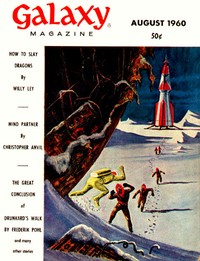
These excerpts from Monument offer a compact introduction to a story that balances scientific speculation with character-driven comedy. Dr. King's methodical approach to accidental discovery creates a distinctive narrative rhythm. Readers who enjoy stories where scientific hubris meets unintended consequences will find this a rewarding short work. The story's 1960 publication places it in the golden age of science fiction, but its tone is more playful than earnest. Approach it as a wry character study rather than a hard-science puzzle.
That moment in Monument where King’s grand demonstration quietly misfires stayed with me—how fame and failure sometimes share the same room. It reminded me of the quiet tensions inside Game preserve — Key Ideas to Explore, where the wildness we try to manage keeps slipping through our hands. Just a familiar ache, really.
A brief reflection can help important ideas stay with you longer.