About 24 minutes
The Downhill Side of Thirty — Reading Companion
Social Speculation
5,306 recorded words. 0 minutes difference from this book's estimate.
View Gutenberg source #60531
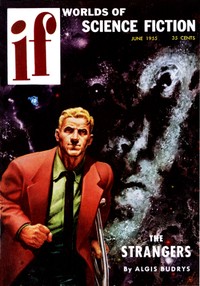
The source record for Forced Move — Text and Context measures this digital text at 5,311 words, 24 min estimated reading time, and 1 detected text section.
The text analysis averages about 20.5 words per sentence, while the detected sections provide another way to judge how the source is divided.
Project Gutenberg metadata also associates the work with “Science fiction,” connecting these edition facts with the source record’s subject description.
Explore this collection
These alternatives are selected using recorded categories and estimated reading time.
About 24 minutes
Social Speculation
5,306 recorded words. 0 minutes difference from this book's estimate.
View Gutenberg source #60531About 25 minutes
Social Speculation
5,713 recorded words. 1 minutes difference from this book's estimate.
View Gutenberg source #51435About 28 minutes
Social Speculation
6,282 recorded words. 4 minutes difference from this book's estimate.
View Gutenberg source #51421Search stored excerpts and compare books → Choose by your preferences →
Choices use stored catalog measurements. Estimates vary with reading speed. A shared category is a catalog label, not a claim that two books have the same argument or literary quality.
Search reads excerpt text stored with this catalog and links to its associated Gutenberg record. The connection is stored in the site database; this tool does not recheck that every excerpt is word-for-word identical to that external record. Excerpt search does not cover every chapter and does not verify historical publication dates.
Catalog snapshot checked: 2026-09-26. Coverage: 96 public books, 96 available source excerpts.
Calculated from edition completeness, EPUB availability, text structure and catalogue metadata. Not a user rating.
Total of 100 points, scaled to a 2.5-5.0 range. Editions with an empty description or a missing EPUB file are not scored.
Public-domain source text
The source text is kept in the dedicated reader, separate from this catalogue record and its commentary.
The story opens with Ruy, an infiltrator in a stolen uniform, approaching the Pentagon under a frosty sky. The narrative immediately establishes a tension between human resolve and cold calculation: Ruy grinds out a cigarette, his stomach hardens, and he reflects that what must be done, must be done. The Pentagon is described as a "massive gray outline" with an entrance like a "glowing peep-hole into the inferno of an atomic drive." This visceral, almost gothic imagery sets a tone of dread and urgency.
Ruy's mission is framed by a war against invaders from outer space, but the story quickly pivots to a critique of computer-led strategy. The computers always predict "optimum maneuver envelopes" yet after five years, "not a single battle had been won." This paradox—optimization without victory—drives the plot and invites readers to question the logic of automated warfare.
The opening sequence relies on small, concrete details to build suspense. Ruy's forged pass is described as having "48 hours of alleged validity gleaming brightly in red letters under the plastic overlaminate." The word "alleged" hints at its fragility. When an MP scrutinizes his face, Ruy feels his uniform "shrink tighter and tighter," and the "silvery commander's insignia" weighs on him. These physical sensations—the tight uniform, the heavy insignia—externalize his inner fear.
The setting is equally precise. Snow has fallen, the sky is clear, and the Pentagon looms "dark and foreboding." The brightly lit entrance is compared to a "peep-hole into the inferno of an atomic drive," blending the mundane (a building entrance) with the catastrophic (atomic fire). This juxtaposition recurs throughout the story, grounding abstract war concepts in tangible, uneasy imagery.
Once inside, Ruy's thoughts reveal the story's central conflict: a war prolonged by computers that prioritize "optimum" moves over decisive action. The text states that computers "always predicted optimum maneuver envelopes" and "kept battle losses to a minimum—merely dribbling away the resources of the solar system." The word "dribbling" is key—it suggests a slow, wasteful drain rather than a strategic victory.
Ruy believes he can "turn the tide, but very probably his life would be the minimum sacrifice." This phrase echoes the story's epigraph: "Wars are won by sacrifice. But computers don't consider sacrifice an optimum move." The tension between human sacrifice and machine optimization is the story's philosophical core. Readers should note how this theme is introduced early and then tested through Ruy's actions.
The narrative voice is tight and internal, staying close to Ruy's perspective. Sentences are often short and declarative: "It was axiomatic." "This was the only way." "Two doors gave way before Ruy's pocket vibrator." This clipped style mirrors the pressure of the infiltration and the binary logic of the computers.
The structure moves from external action (the walk to the Pentagon, the pass inspection) to internal reflection (the war's history, Ruy's decision). The pocket vibrator that opens locks is a small but telling detail—a piece of spycraft that feels plausible for 1955 technology. The story balances these practical elements with broader speculation about war and computation.
The provided excerpts end before Ruy reaches his objective beyond the massive door. We know he has a plan, but not its outcome. The story's title, Forced Move, is a chess term—a move compelled by circumstance, not choice. This suggests Ruy's infiltration is itself a forced move, a desperate gambit against the computers' logic.
Readers should pay attention to how the story resolves the tension between Ruy's personal sacrifice and the computers' optimization. Does his plan succeed? Does the story endorse or critique his reasoning? The excerpts set up a clear binary—human intuition versus machine calculation—but the ending may complicate that binary. The war's stalemate and the invaders' own exhaustion hint at a mutual deadlock that no single move can break.
Forced Move is a compact work of social speculation that uses a spy-thriller frame to question the logic of automated warfare. Readers will find its strength in the tension between Ruy's visceral fear and the cold abstractions of computer strategy. The story rewards attention to small details—the feel of a uniform, the hum of a lock—that ground its speculative premise in human experience. Approach it as a thought experiment about optimization, sacrifice, and the limits of machine decision-making.
The rain kept up its soft percussion against the window while I flipped through Forced Move again, lingering on Ruy’s hollow certainty in the Pentagon corridors. That slippery line between system logic and human instinct stayed with me long after. Later, drying a mug, I noticed the worn spine of Shatter the Wall — Reading Companion on my shelf—a different angle, same stubborn question. One book quietly opened the other.
Create a short personal record of your experience with this book.