About 42 minutes
The Spy in the Elevator — Inside the Classic
Social Speculation
9,575 recorded words. 1 minutes difference from this book's estimate.
View Gutenberg source #51687
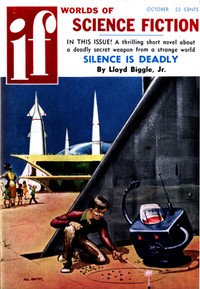
Game preserve — Key Ideas to Explore can be approached with a clearer sense of reading commitment from its source measurements: 9,390 words, 41 min estimated reading time, and 1 detected text section.
The text analysis averages about 16.4 words per sentence, while the detected sections provide another way to judge how the source is divided.
Project Gutenberg metadata also associates the work with “Science fiction,” connecting these edition facts with the source record’s subject description.
Explore this collection
These alternatives are selected using recorded categories and estimated reading time.
About 42 minutes
Social Speculation
9,575 recorded words. 1 minutes difference from this book's estimate.
View Gutenberg source #51687About 42 minutes
Social Speculation
9,600 recorded words. 1 minutes difference from this book's estimate.
View Gutenberg source #59498About 43 minutes
Social Speculation
9,801 recorded words. 2 minutes difference from this book's estimate.
View Gutenberg source #59224Search stored excerpts and compare books → Choose by your preferences →
Choices use stored catalog measurements. Estimates vary with reading speed. A shared category is a catalog label, not a claim that two books have the same argument or literary quality.
Search reads excerpt text stored with this catalog and links to its associated Gutenberg record. The connection is stored in the site database; this tool does not recheck that every excerpt is word-for-word identical to that external record. Excerpt search does not cover every chapter and does not verify historical publication dates.
Catalog snapshot checked: 2026-09-26. Coverage: 96 public books, 96 available source excerpts.
Calculated from edition completeness, EPUB availability, text structure and catalogue metadata. Not a user rating.
Total of 100 points, scaled to a 2.5-5.0 range. Editions with an empty description or a missing EPUB file are not scored.
Public-domain source text
The source text is kept in the dedicated reader, separate from this catalogue record and its commentary.
Rog Phillips's 1957 story opens with a clinical explanation of a future where 'morons'—humans born without intelligence after a war—are placed in isolated preserves. The narrative quickly shifts to the perspective of Elf, a boy who is 'the only one like her' among the herd, hinting at his exceptional intelligence. The catalog subjects list 'Boys -- Fiction' and 'Hunting -- Fiction,' but the excerpts reveal a more complex dynamic: the hunters are government agents culling intelligent offspring, and the hunted are not animals but humans. The story's voice oscillates between detached exposition and Elf's sensory, limited point of view, creating a tension between the official rationale and the lived experience of the preserve.
The catalog subject 'Social Speculation' aptly frames this story, but the excerpts show a specific kind of speculation: one that uses a biological catastrophe to explore eugenics and state control. The opening paragraphs detail a sterilization program and the creation of preserves as a 'logical solution' to the 'moron' problem. The language is coldly bureaucratic: 'Parents and offspring were sterilized and the offspring placed in state institutions.' Yet the narrative undercuts this official story by showing the preserve from inside—the herd's simple chants ('Hi-hi-hi!'), their physical labor carrying 'It,' and Elf's hidden intelligence. The story does not endorse the government's view; instead, it lets Elf's observations quietly contradict the premise that the 'morons' are 'totally lacking in intelligence.'
Elf's narration is restricted to what he can see, hear, and feel. He notices the 'lush grass,' the 'ear shattering sound' of a gun, and the 'cold' of a new 'It' (a metal object, possibly a gun). His understanding is partial: he thinks the hunters are 'creatures' and their weapons are 'Its.' The story conveys his intelligence not through abstract reasoning but through his actions—hiding, following, planning. When he finds the girl Elf dead, he observes the wound 'curiously' and shakes her, but he does not fully grasp death. This limited viewpoint forces the reader to infer the larger context, creating a gap between what Elf experiences and what the reader knows. The excerpts do not reveal whether Elf ever reaches the hunters' world, but his decision to follow them suggests a desire for belonging.
The catalog subject 'Hunting -- Fiction' is literal but misleading: the hunters are government agents tasked with killing intelligent offspring to prevent 'recontaminating the race.' Their dialogue is matter-of-fact: 'Right through the head. She never knew what happened.' They discuss the survey results—'twenty-two colonies,' 'only one colony so contaminated we had to wipe it out altogether'—in the same tone as a business report. Yet the story does not condemn them outright; it presents their actions as routine. The ambiguity lies in Elf's reaction: he wants to join them, believing 'they were his kind.' The excerpts do not show the hunters' response to Elf, leaving the outcome open. This tension between the hunters' clinical violence and Elf's naive admiration complicates any simple moral reading.
The story alternates between two modes: an omniscient, historical exposition and a close third-person limited to Elf. The exposition uses precise dates and scientific language ('electron microscope,' 'contaminated gene'), while Elf's sections rely on sensory details and simple syntax. This structural contrast mirrors the thematic conflict between the state's rationalized control and the individual's lived reality. The excerpts show the exposition fading as Elf's perspective takes over, suggesting that the story's true focus is not the sociological problem but one boy's attempt to navigate a world that labels him a threat. The catalog's 'Short stories' subject is accurate, but the story's scope is larger than its word count suggests, packing a speculative premise and a character study into a compact narrative.
Readers should attend to the way Phillips uses Elf's limited understanding to create dramatic irony. The story withholds key information—the nature of 'It,' the fate of the girl, the hunters' final decision—leaving gaps that invite interpretation. The catalog subjects emphasize 'Boys' and 'Hunting,' but the excerpts suggest a darker meditation on what it means to be human when intelligence becomes a liability. Approach this story as a puzzle box: the clues are in the details Elf notices but does not comprehend.
There’s something about Elf’s quiet decision to follow the hunters that stays with me—that ache of wanting to belong to a world that doesn’t want you. It reminds me of another old favorite, Ecology on Rollins Island — Inside the Classic, where the island’s creatures face their own strange rules. I still think about both.
Use these questions to collect your thoughts before moving on.