About 36 minutes
Time Payment — Inside the Classic
Space Future
8,054 recorded words. 1 minutes difference from this book's estimate.
View Gutenberg source #60886
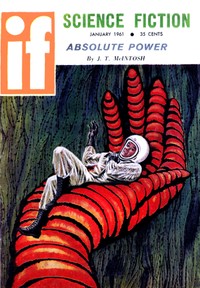
The source record for Vassi — Themes and Context measures this digital text at 7,943 words, 35 min estimated reading time, and 1 detected text section.
The text analysis averages about 10.4 words per sentence, while the detected sections provide another way to judge how the source is divided.
Project Gutenberg metadata also associates the work with “Science fiction,” connecting these edition facts with the source record’s subject description.
Explore this collection
These alternatives are selected using recorded categories and estimated reading time.
About 36 minutes
Space Future
8,054 recorded words. 1 minutes difference from this book's estimate.
View Gutenberg source #60886About 38 minutes
Space Future
8,710 recorded words. 3 minutes difference from this book's estimate.
View Gutenberg source #51336About 38 minutes
Space Future
8,722 recorded words. 3 minutes difference from this book's estimate.
View Gutenberg source #51351Search stored excerpts and compare books → Choose by your preferences →
Choices use stored catalog measurements. Estimates vary with reading speed. A shared category is a catalog label, not a claim that two books have the same argument or literary quality.
Search reads excerpt text stored with this catalog and links to its associated Gutenberg record. The connection is stored in the site database; this tool does not recheck that every excerpt is word-for-word identical to that external record. Excerpt search does not cover every chapter and does not verify historical publication dates.
Catalog snapshot checked: 2026-09-26. Coverage: 96 public books, 96 available source excerpts.
Calculated from edition completeness, EPUB availability, text structure and catalogue metadata. Not a user rating.
Total of 100 points, scaled to a 2.5-5.0 range. Editions with an empty description or a missing EPUB file are not scored.
Public-domain source text
The source text is kept in the dedicated reader, separate from this catalogue record and its commentary.
Art Lewis's 1961 short story "Vassi" opens with Julia Fenway fumbling for her keys outside her apartment, already breathless from a short walk. The meticulous description of her single apartment—a Murphy bed, a seventeen-inch television, a radio that doesn't work—establishes a cramped, ordinary world. The catalog subjects list "Time travel -- Fiction" and "Terminally ill -- Fiction," and the excerpts bear this out: Julia has just learned she has six months to live. But the story's focus is less on the mechanics of time travel than on Julia's immediate, visceral experience of her diagnosis and the strange proposition from Vassi, a man who claims to be from the future.
The excerpts devote considerable space to the mundane specifics of Julia's life. Her purse contains "a crumpled kleenex, worn-out lipstick, change purse, pencils, movie stubs." The landlady's door emits "cooked cabbage odor." These details ground the science-fiction premise in a recognizable, shabby reality. Julia's cat Belle is described with precise physicality: she "poked her head out of the kitchen," "rubbed her side along the wall to scratch off the sleep," and later "took a swipe with a hind paw." The story's voice shifts between third-person narration and Julia's internal monologue, marked by italics: "Those keys! Where are those keys! I'm becoming a regular pack rat lately." This technique gives direct access to her anxiety and self-deprecation, making the fantastic elements feel like an intrusion into a very ordinary life.
The doctor's news is never directly quoted; instead, Julia recalls it indirectly: "He could have told her she had six months to live while she was wearing flats." The story withholds the clinical moment, focusing instead on her emotional aftermath. Vassi's entrance is similarly oblique—he appears without explanation, and their conversation is presented as a fragmented memory or internal replay: "'They said it would work,'" he says. The central dilemma—killing the cat to transport it through time—is laid out in stark, unadorned dialogue. Julia's resistance is immediate: "I can't kill my cat!" Vassi's logic is coldly pragmatic: "If it works, it's only temporary." The excerpts do not reveal the outcome of this experiment, leaving the reader to wonder whether Julia will go through with it, and whether Vassi is real or a hallucination born of her fear.
Vassi himself remains a shadowy figure. He cannot physically touch the cat, a detail that hints at some limitation of his time-travel technology or his own nature. Julia's uncertainty about his reality is explicit: "I don't know whether or not it really happened. I'm not sure now, Vassi. I am going out of my mind." The story thus blurs the line between science fiction and psychological drama. The catalog subject "Time travel -- Fiction" is accurate, but the excerpts suggest that the story is equally concerned with Julia's mental state and her desperate need for hope. The final lines of the excerpts show her clinging to the idea that Vassi will return: "He's coming back and he'll take both of us with him." Whether this is faith or delusion is left unresolved in the available text.
Readers should pay attention to the story's use of interior monologue and its careful accumulation of realistic detail. The cat Belle is more than a pet; she is a test case for the story's central ethical question. The excerpts do not reveal whether the time travel succeeds, so the reader must attend to the balance between Julia's hope and her fear. The story's brevity—around 8,000 words—means every detail counts, from the broken radio to the landlady's intrusive concern.
I keep thinking about Julia in that story, how she sat with her cat and the weight of choosing. It reminded me of something quieter I stumbled on later, What is POSAT? — Context and Discussion, which lingers the same way—not about time travel, but about the small, hard moments where we decide what matters. Some books stay like a held breath. That one did for me.
Capture what you thought, learned, and would like to remember.