About 38 minutes
The Spicy Sound of Success — Key Ideas to Explore
Space Future
8,722 recorded words. 0 minutes difference from this book's estimate.
View Gutenberg source #51351
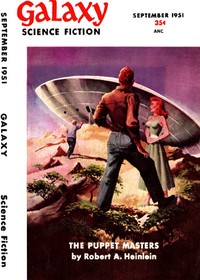
The catalog record for What is POSAT? — Context and Discussion provides practical reading context through 8,710 words, 38 min estimated reading time, and 1 detected text section.
The text analysis averages about 16.1 words per sentence, while the detected sections provide another way to judge how the source is divided.
Project Gutenberg metadata also associates the work with “Science fiction,” connecting these edition facts with the source record’s subject description.
Explore this collection
These alternatives are selected using recorded categories and estimated reading time.
About 38 minutes
Space Future
8,722 recorded words. 0 minutes difference from this book's estimate.
View Gutenberg source #51351About 38 minutes
Space Future
8,694 recorded words. 0 minutes difference from this book's estimate.
View Gutenberg source #59575About 40 minutes
Space Future
9,006 recorded words. 2 minutes difference from this book's estimate.
View Gutenberg source #59842Search stored excerpts and compare books → Choose by your preferences →
Choices use stored catalog measurements. Estimates vary with reading speed. A shared category is a catalog label, not a claim that two books have the same argument or literary quality.
Search reads excerpt text stored with this catalog and links to its associated Gutenberg record. The connection is stored in the site database; this tool does not recheck that every excerpt is word-for-word identical to that external record. Excerpt search does not cover every chapter and does not verify historical publication dates.
Catalog snapshot checked: 2026-09-26. Coverage: 96 public books, 96 available source excerpts.
Calculated from edition completeness, EPUB availability, text structure and catalogue metadata. Not a user rating.
Total of 100 points, scaled to a 2.5-5.0 range. Editions with an empty description or a missing EPUB file are not scored.
Public-domain source text
The source text is kept in the dedicated reader, separate from this catalogue record and its commentary.
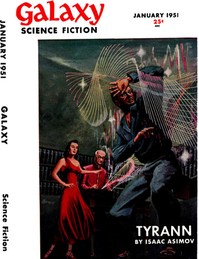
The story opens not with a character but with a classified advertisement: “MASTERY OF ALL KNOWLEDGE CAN BE YOURS!” This ad, placed by the Perpetual Order of Seekers After Truth (POSAT), appears in several magazines in July 1953. The narrator notes that most readers ignore it, but three individuals respond in ways that reveal their personalities and circumstances. Bill Evans, an unemployed pharmacist, clips the coupon with a stubby pencil because he has “nothing to lose.” Miss Elizabeth Arnable, who reads the Antivivisectionist Gazette and keeps cats, mails it in violet ink. Donald Alford, a research physicist, initially passes over the ad while engrossed in a paper by his admired former professor, Dr. Crandon. The story thus establishes a contrast between casual readers and those whose lives are poised for change.
The excerpt introduces the three respondents through sharply drawn details. Bill Evans is defined by his unemployment and a worn-down skepticism: he “had long since ceased to believe” that he could alter his life, yet he mails the coupon anyway. Miss Arnable is characterized by her cats and her radio; she buys the Antivivisectionist Gazette and pounces on the ad “as a trout might snap at a particularly attractive fly.” Donald Alford is absorbed in professional reading, and his reaction is one of disregard—until he later realizes “some component of the advertisement had been noted.” These vignettes do not yet reveal what POSAT actually is, but they establish that the society’s appeal varies by the reader’s circumstances: desperation, eccentricity, or intellectual curiosity.
Later in the story, Dr. Crandon explains POSAT’s origins to a bewildered Don. The society was founded four hundred years ago by a “super-genius” who, working alone in the Italian Renaissance, derived calculus, quantum theory, relativity, and the mathematics of nuclear binding energy. Crandon claims this man built an atomic reactor and foresaw the dangers of atomic weapons. To prevent misuse, he gathered brilliant contemporaries—Leonardo, Michelangelo—into a secret society to preserve his discoveries until humanity was ready. The explanation is delivered in Crandon’s “clear and logical” classroom manner, but Don objects: “It’s an observed phenomenon. It hasn’t been derived.” The tension between scientific orthodoxy and the society’s claims is left unresolved in the excerpt.
The catalog subjects list “Secret societies -- Fiction” and “Science fiction,” but the excerpts show that POSAT is presented not as a sinister cabal but as a benevolent, ancient organization. The story’s structure—opening with an ad, then introducing three disparate respondents—suggests a focus on how people interpret ambiguous information. Notably, the physicist Don is the only one who receives a detailed explanation; the fates of Bill and Miss Arnable are not shown in the provided text. The narrative also includes a metafictional note: the ad appeared in “July 1953” issues of magazines, though the story was published in 1951. This temporal displacement hints at the story’s playful treatment of time, echoing the founder’s own “displacement in time.”
Readers should pay attention to how the story balances its three opening threads. The excerpts provide a full origin myth for POSAT but leave Bill and Miss Arnable’s outcomes unknown. The narrative voice is wry and observational, often noting what characters fail to notice. The story rewards attention to small details—the violet ink, the stubby pencil, the abandoned bus-seat magazine—that define each respondent’s world. Whether the society is genuine or a delusion remains an open question in the text provided.
I keep returning to that moment in What is POSAT? where curiosity outweighs doubt, the quiet thrill of unanswered questions. It reminds me of poring over maritime ballads, where every verse hides a deeper secret. That same patient spiral of thought lives in Blow the Man Down — A Closer Reading, like finding a faded photograph tucked inside an old book.
Save your reaction, strongest insight, and memorable passage.