About 59 minutes
To Save Earth — Inside the Classic
Space Future
13,543 recorded words. 0 minutes difference from this book's estimate.
View Gutenberg source #53059
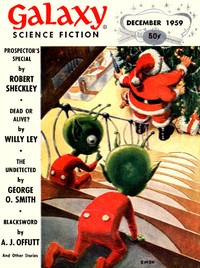
Before opening The Undetected — Inside the Classic, the edition data offers a quick orientation: 13,541 words, 59 min estimated reading time, and 2 detected text sections.
The text analysis averages about 17.8 words per sentence, while the detected sections provide another way to judge how the source is divided.
Project Gutenberg metadata also associates the work with “Science fiction,” connecting these edition facts with the source record’s subject description.
Explore this collection
These alternatives are selected using recorded categories and estimated reading time.
About 59 minutes
Space Future
13,543 recorded words. 0 minutes difference from this book's estimate.
View Gutenberg source #53059About 62 minutes
Space Future
14,119 recorded words. 3 minutes difference from this book's estimate.
View Gutenberg source #58798About 55 minutes
Space Future
12,550 recorded words. 4 minutes difference from this book's estimate.
View Gutenberg source #59174Search stored excerpts and compare books → Choose by your preferences →
Choices use stored catalog measurements. Estimates vary with reading speed. A shared category is a catalog label, not a claim that two books have the same argument or literary quality.
Search reads excerpt text stored with this catalog and links to its associated Gutenberg record. The connection is stored in the site database; this tool does not recheck that every excerpt is word-for-word identical to that external record. Excerpt search does not cover every chapter and does not verify historical publication dates.
Catalog snapshot checked: 2026-09-26. Coverage: 96 public books, 96 available source excerpts.
Calculated from edition completeness, EPUB availability, text structure and catalogue metadata. Not a user rating.
Total of 100 points, scaled to a 2.5-5.0 range. Editions with an empty description or a missing EPUB file are not scored.
Public-domain source text
The source text is kept in the dedicated reader, separate from this catalogue record and its commentary.
The novella opens with a locked-room murder that is anything but conventional. Detective Captain Schnell arrives at the scene of Gordon Andrews' death to find a crime that seems impossible: every door and window is sealed, yet the killer left no trace. The rain-soaked night and the absence of moisture on the floors add to the puzzle. Schnell's immediate observation—that the very lack of clues is itself a clue—sets the stage for a story where the investigator must think beyond standard procedure.
Smith quickly establishes a cat-and-mouse dynamic between Schnell and an unseen antagonist named Wood. A phone call reveals that Wood is not only aware of the investigation but actively taunting the detective. The dialogue between them introduces a central conflict: Schnell must work within the law, while Wood operates outside it, using psychic abilities to frame the detective and manipulate events.
The murder of Gordon Andrews is presented as a classic locked-room mystery, but Smith subverts the trope by making the absence of clues the defining feature. Schnell notes that the perpetrator deliberately left no evidence, including no moisture despite the storm. This suggests a criminal who plans not just the crime but the perception of it. The narrator's internal conflict—knowing more than he can prove—adds tension. He resists sharing his theories with Chief Weston, fearing the label of 'ex-.' The sealed room becomes a symbol of the larger puzzle: how to catch a criminal who can erase his own tracks.
The text emphasizes that the crime scene is too clean. Every door and window is locked and burglar-bugged, yet the safe is open and contents missing. Schnell's repeated use of 'modus operandi' highlights his methodical approach, but the chief's impatience underscores the pressure to produce results. The reader is left to wonder whether the killer's skill extends beyond physical evidence to psychological manipulation.
Wood's telepathic abilities are not merely a supernatural addition but a tactical advantage. He uses them to orchestrate a frame-up, sending a package of occult items—crystal ball, tarot cards, ESP cards—to Schnell's office at a precisely timed moment. The delivery is designed to be intercepted by Chief Weston, creating the appearance that Schnell is involved in the paranormal. Wood's taunt over the phone reveals his strategy: he forces Schnell to choose between violating the law and being unjustly accused.
The narrative draws a sharp contrast between legal methods and psychic ones. Wood claims he can operate outside the law because he is not bound by it. Schnell's retort—that law and order lose meaning when enforcers break their own rules—frames the conflict as ethical. The psychic element is not just a plot device but a challenge to the detective's principles. The story suggests that the true crime is not the murder but the erosion of trust in the system.
Schnell is caught between his duty to uphold the law and the need to stop a criminal who exploits legal loopholes. The frame-up with the petty cash slip and the package shows how Wood uses bureaucratic procedures against the detective. Schnell's signature is forged, but the evidence is legally sound. The detective's frustration is palpable: he knows the truth but cannot prove it without stepping outside the rules.
The story explores the limits of procedural justice. Wood's personnel-placement agency and his wife's job at a bank hint at a larger network, but the excerpts do not reveal the full extent. Schnell's reading of reports—knowing Wood is a telepath—suggests he is gathering intelligence, but he is constrained by what he can act on. The tension between what Schnell knows and what he can use in court drives the narrative. The reader is left to consider whether the system can adapt to threats that operate beyond its design.
The Undetected offers a compact blend of science fiction and detective fiction, where the puzzle is as much about the investigator's integrity as the criminal's method. Readers should pay attention to the dialogue between Schnell and Wood, as it reveals the philosophical stakes beneath the plot. The story's brevity—under 14,000 words—means every scene carries weight, and the unresolved questions about Wood's motives and the full scope of his abilities linger beyond the final page.
Years ago, I shelved The Undetected and felt a strange fondness for its hidden logic — the quiet way truth waits behind perception. That same patience dwells in Welcome, Martians! — Edition Insights, a companion in tone rather than plot, both whispering that what seems absent often lingers, politely, just out of sight.
Build a private reading journal entry for this title.