About 30 minutes
Security Plan — A Reader’s Guide
Space Future
6,745 recorded words. 1 minutes difference from this book's estimate.
View Gutenberg source #51588
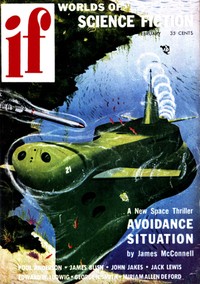
For Shango — Edition Insights, the stored edition analysis reports 6,973 words, 31 min estimated reading time, and 1 detected text section.
The text analysis averages about 16.4 words per sentence, while the detected sections provide another way to judge how the source is divided.
Project Gutenberg metadata also associates the work with “Science fiction,” connecting these edition facts with the source record’s subject description.
Explore this collection
These alternatives are selected using recorded categories and estimated reading time.
About 30 minutes
Space Future
6,745 recorded words. 1 minutes difference from this book's estimate.
View Gutenberg source #51588About 28 minutes
Space Future
6,251 recorded words. 3 minutes difference from this book's estimate.
View Gutenberg source #59252About 35 minutes
Space Future
7,943 recorded words. 4 minutes difference from this book's estimate.
View Gutenberg source #60921Search stored excerpts and compare books → Choose by your preferences →
Choices use stored catalog measurements. Estimates vary with reading speed. A shared category is a catalog label, not a claim that two books have the same argument or literary quality.
Search reads excerpt text stored with this catalog and links to its associated Gutenberg record. The connection is stored in the site database; this tool does not recheck that every excerpt is word-for-word identical to that external record. Excerpt search does not cover every chapter and does not verify historical publication dates.
Catalog snapshot checked: 2026-09-26. Coverage: 96 public books, 96 available source excerpts.
Calculated from edition completeness, EPUB availability, text structure and catalogue metadata. Not a user rating.
Total of 100 points, scaled to a 2.5-5.0 range. Editions with an empty description or a missing EPUB file are not scored.
Public-domain source text
The source text is kept in the dedicated reader, separate from this catalogue record and its commentary.
John Jakes' 1956 story "Shango" opens with a briefing in a room lined with star maps, where chief Van Isaac points to a violet dot on a thin yellow line—the planet Valaya. The setting immediately establishes a colonial framework: Valaya was "peopled largely by residents of the Caribbean" and left "rather backward—by choice of the colonists." The investigator, Arnold Koven, is dispatched to stop a man named Bruschloss, a Betelgeuse Bloc citizen suspected of fomenting tribal raids. The excerpts reveal a narrative built on layers of communication—official briefings, surveillance gaps, and a native dance that carries hidden meanings.
The catalog subjects list "Space colonies -- Fiction" and "Communication -- Fiction," but the excerpts show a more specific dynamic: a colonial administration that cannot monitor its own subjects. Van Isaac explains that the local ruler "has in no way communicated with any of the other tribes"—yet the attacks are coordinated. The G.C.I.A. agent Spotwood "couldn't plant cameras or sound equipment" due to a code forbidding it. This gap in surveillance is the story's engine. The colonists' own rules prevent them from seeing what the natives are doing, forcing Koven to rely on indirect methods. The narrative thus critiques the limits of technological oversight, a theme that emerges from the text rather than the catalog headings.
The story's central device is a dance that conveys tactical information. Koven forces the dancer Chemin to demonstrate: "She crossed her wrists and moved her fingers in a fluttering motion" for a peninsula, then another gesture for a meeting place. The dance is not mere ritual but a precise language, one that the colonial authorities had dismissed. When Chemin performs the new message, the ruler "uttered a sharp gasp and lurched up from his woven chair as he read the new message." The dance bypasses the surveillance that monitors drums and runners. Jakes builds the climax around this embodied communication, contrasting it with the high-tech star maps and projection lanterns of the opening. The excerpts do not reveal how Koven learned to interpret the dance, but they show its lethal effectiveness.
Near the story's end, Spotwood asks Koven how he understood the dance. Koven points to a book on the table: "The arts no longer convey meaning, but the ruler of Maru managed to put it back in. Something you didn't look for. Something I wouldn't have looked for ... if I hadn't stopped at a Vendobook." This moment ties the narrative to the catalog subject "Communication -- Fiction" in an unexpected way. The solution is not a gadget but a book—a physical object in a science-fiction setting. The excerpts do not name the book or its contents, but the implication is that it provided a framework for reading symbolic gestures. This detail grounds the story in a specific, low-tech solution, subverting the expectation that advanced problems require advanced tools.
The excerpts from "Shango" offer a self-contained episode that rewards attention to its layered communication systems. Readers may note how the colonial setting shapes every interaction, from the briefing room to the dance circle. The story's brevity—under 7,000 words—means that each scene carries weight. Pay particular attention to the moments when characters misinterpret or overlook information, as these gaps drive the plot. The ending, with Koven at a communicator calling for Control squads, leaves the aftermath ambiguous, inviting reflection on whether the colonial order has truly been restored or merely reinforced.
That rainy afternoon, I kept thinking about how Jakes made a dance a code—how the primitive became the cleverest communication. It stayed with me, that idea, until I found myself reaching for something nearby, Operation Boomerang — Themes and Context, almost without deciding to. The rain kept falling; the pages turned themselves.
Use these questions to collect your thoughts before moving on.