About 21 minutes
The Big Engine — Text and Context
Machines Invention
4,819 recorded words. 2 minutes difference from this book's estimate.
View Gutenberg source #51549
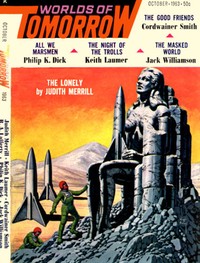
This digital edition of Double Take — Themes and Context is described by source-level measurements including 4,215 words, 19 min estimated reading time, and 1 detected text section.
The text analysis averages about 22.5 words per sentence, while the detected sections provide another way to judge how the source is divided.
Project Gutenberg metadata also associates the work with “Science fiction,” connecting these edition facts with the source record’s subject description.
Explore this collection
These alternatives are selected using recorded categories and estimated reading time.
About 21 minutes
Machines Invention
4,819 recorded words. 2 minutes difference from this book's estimate.
View Gutenberg source #51549About 24 minutes
Machines Invention
5,510 recorded words. 5 minutes difference from this book's estimate.
View Gutenberg source #59304About 26 minutes
Machines Invention
5,885 recorded words. 7 minutes difference from this book's estimate.
View Gutenberg source #59982Search stored excerpts and compare books → Choose by your preferences →
Choices use stored catalog measurements. Estimates vary with reading speed. A shared category is a catalog label, not a claim that two books have the same argument or literary quality.
Search reads excerpt text stored with this catalog and links to its associated Gutenberg record. The connection is stored in the site database; this tool does not recheck that every excerpt is word-for-word identical to that external record. Excerpt search does not cover every chapter and does not verify historical publication dates.
Catalog snapshot checked: 2026-09-26. Coverage: 96 public books, 96 available source excerpts.
Calculated from edition completeness, EPUB availability, text structure and catalogue metadata. Not a user rating.
Total of 100 points, scaled to a 2.5-5.0 range. Editions with an empty description or a missing EPUB file are not scored.
Public-domain source text
The source text is kept in the dedicated reader, separate from this catalogue record and its commentary.
The story begins not with a human character but with alien Travelers who dig a metal capsule from a pile of moldering rock. The capsule is the Chicago Time Capsule, a carefully produced record of 1960 America. The narrator notes that the Travelers have no ears or eyes as humans know them, yet they “saw” and “heard” quite as well—even better. This sensory difference becomes the engine of the plot: the Travelers glean far more from the capsule’s tape recording than its human creators intended.
The excerpt quickly establishes a contrast between human ambition and alien perception. The capsule was meant to showcase “the glories that were the common man’s birthright in an enlightened democracy,” but the Travelers’ interpretation will likely subvert that goal. The story’s opening thus sets up a central irony about communication across species and centuries.
The time capsule itself is described in vivid, almost tactile detail. It was once “smooth, shiny and impervious to wear,” but by the time the Travelers find it, it is “battered and corroded.” The narrator traces its history from the ceremonial burial—the Mayor tossing lake sand into the hole, a photograph against the skyline—to the long centuries of silence. The tiny radio transmitter sends out its signal at the planned moment, but no one hears; eventually the batteries give out. This attention to the capsule’s physical decay and its failed broadcast underscores the fragility of human attempts to reach the future.
The story devotes a paragraph to explaining why two intelligent races are unlikely to be similar: “A being develops sense organs for no other reason than to make it aware of its environment.” The Travelers lack ears and eyes but have other organs that let them perceive the world differently. This is not mere background; it directly affects how they interpret the tape. The narrator suggests that because the Travelers sense more than humans, they extract unintended meanings from the recording. The reader is left to wonder what exactly they perceive—and what the humans who made the capsule failed to anticipate.
The excerpt explains that the capsule’s contents were not a random radio show but a specially produced documentary. The planners rejected soap operas, news analyses, and comedy shows as unflattering or untruthful. Instead, they aimed for a “broad canvas” celebrating democracy, timed to July 4th. This choice reveals the anxieties of the capsule’s creators: they wanted to control the narrative of their civilization. Yet the story’s premise—that the Travelers will interpret the tape differently—suggests that such control is impossible. The documentary becomes a kind of unintended self-portrait, filtered through alien senses.
The provided text cuts off before the Travelers actually play the tape or reveal their interpretation. The reader knows only that they “gleaned so much more” than planned. The story’s title, Double Take, hints at a dual perspective: the human intention versus the alien reception. But without the full text, one cannot know whether the Travelers’ reading is comical, tragic, or simply alien. The excerpts establish a strong setup—a capsule as a time capsule of assumptions—but the payoff remains unknown. This makes the story a study in anticipation: the reader, like the Travelers, must infer meaning from incomplete evidence.
Because the excerpts end before the tape is played, the story’s central revelation is left to the imagination. Readers should pay close attention to the details of the capsule’s construction and the Travelers’ sensory description—these are the clues that will likely shape the ending. The story is short enough to read in one sitting, and its irony about human self-presentation rewards careful attention to the gap between what the capsule says and what the Travelers perceive.
The rain tapped the window while I read how those alien visitors pieced together our time capsule with such strange fidelity—understanding everything, grasping nothing. It made me think of other ways we misread what’s given to us, which is why I later pulled My Lady Greensleeves — Background and Themes from the shelf. Different world entirely, yet that same quiet ache between intention and reception lingered there too.
Use these questions to collect your thoughts before moving on.