About 37 minutes
After Some Tomorrow — Key Ideas to Explore
Machines Invention
8,309 recorded words. 0 minutes difference from this book's estimate.
View Gutenberg source #59514
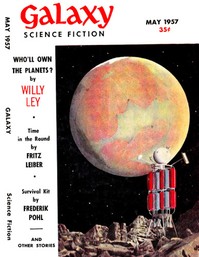
For Time In the Round — A Reader’s Guide, the stored edition analysis reports 8,486 words, 37 min estimated reading time, and 1 detected text section.
The text analysis averages about 14.9 words per sentence, while the detected sections provide another way to judge how the source is divided.
Project Gutenberg metadata also associates the work with “Science fiction,” connecting these edition facts with the source record’s subject description.
Explore this collection
These alternatives are selected using recorded categories and estimated reading time.
About 37 minutes
Machines Invention
8,309 recorded words. 0 minutes difference from this book's estimate.
View Gutenberg source #59514About 38 minutes
Machines Invention
8,624 recorded words. 1 minutes difference from this book's estimate.
View Gutenberg source #51433About 36 minutes
Machines Invention
8,075 recorded words. 1 minutes difference from this book's estimate.
View Gutenberg source #51605Search stored excerpts and compare books → Choose by your preferences →
Choices use stored catalog measurements. Estimates vary with reading speed. A shared category is a catalog label, not a claim that two books have the same argument or literary quality.
Search reads excerpt text stored with this catalog and links to its associated Gutenberg record. The connection is stored in the site database; this tool does not recheck that every excerpt is word-for-word identical to that external record. Excerpt search does not cover every chapter and does not verify historical publication dates.
Catalog snapshot checked: 2026-09-26. Coverage: 96 public books, 96 available source excerpts.
Calculated from edition completeness, EPUB availability, text structure and catalogue metadata. Not a user rating.
Total of 100 points, scaled to a 2.5-5.0 range. Editions with an empty description or a missing EPUB file are not scored.
Public-domain source text
The source text is kept in the dedicated reader, separate from this catalogue record and its commentary.
From its first image—a gray, hairless dog barking soundlessly at a crystal Time Theater—Fritz Leiber's story establishes a world where aggression is defanged. The boy called Butcher jabs a metal tube under the dog's eyelid, then into its stomach; the dog only wags its tail and grins. Nothing hurts. This opening sets up the central puzzle: in a society where even dog fights are 'uninj' and everyone gives in to the puny, what happens when a boy who craves real bloodshed gets access to a device that might make time travel—and real injury—possible?
The story's future is defined by the absence of pain. Butcher's dog Brute has 'formidable ivory fangs' and a 'long black tongue,' but when Butch jabs it, the dog's tail thumps the pavement. The other boys' dogs pile into a fight that is all spin and no damage—'a fanged merry-go-round.' Butcher's disgust is palpable: 'I don't like uninj fights. They're just a pretend, like everything else.' Leiber underlines this by having Butcher jab himself with the tube and squeak—the only pain in the scene, and it's self-inflicted. The society has eliminated hurt so thoroughly that the boy must hurt himself to feel anything real.
The Time Theater's bubble is presented as a viewing device, but the interpreter mentions a minority theory: that it operates by 'hypermemory' and might actually permit time travel, blocked only by 'a mental inability.' This ambiguity is crucial. The interpreter dismisses the theory, but the story's action hinges on it. When the sorcerer inside the bubble pushes a warrior 'backward so that in a moment he must cross-section,' the warrior emerges into the theater, rain dripping from his beard. Butcher cheers; Hal is aghast. The interpreter insists the 'safeguards are now energized,' but the warrior grabs a woman from the audience. The bubble's status—simulation or gateway—remains unresolved, and the story exploits that uncertainty.
Butcher is not a passive observer. He 'folds his arms and scowls' when questioned, and he verbally encourages the sorcerer: 'Sock it to 'em!' When the warrior emerges, Butcher claims credit: 'that old guy in the bubble helped me. Must take two to work it.' The story gives him agency in breaching the barrier between spectacle and reality. Yet the excerpts do not reveal the outcome of the warrior's intrusion. The narrative leaves Butcher's success ambiguous—did he truly cause a time breach, or is the warrior's appearance a malfunction? The reader is left with the same uncertainty that the interpreter tried to dismiss.
Readers should watch how Leiber uses the dog fights and the Time Theater as parallel arenas for testing the boundary between play and reality. The story's power lies not in explaining the technology but in letting the contradiction stand: a boy who wants real hurt in a world that has outlawed it, and a machine that may or may not grant his wish. Pay attention to what the interpreter says—and what he fails to prevent.
That Leiber story stayed with me because the dog refuses to bleed, and the warrior stepping out of the bubble made me wonder where memory ends and reality begins. It reminded me of how With These Hands quietly circles similar ground—the ache of wanting something true amidst the simulated. With These Hands — Context and Discussion felt like a gentle echo of that same lingering unease.
A brief reflection can help important ideas stay with you longer.