About 47 minutes
With These Hands — Context and Discussion
Machines Invention
10,633 recorded words. 2 minutes difference from this book's estimate.
View Gutenberg source #51531
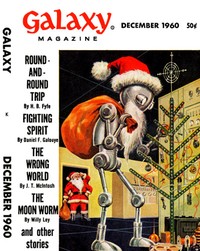
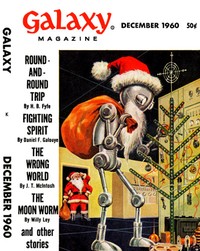
The source record for Round-and-Round Trip — Themes and Context measures this digital text at 10,169 words, 45 min estimated reading time, and 2 detected text sections.
The text analysis averages about 14.4 words per sentence, while the detected sections provide another way to judge how the source is divided.
Project Gutenberg metadata also associates the work with “Science fiction,” connecting these edition facts with the source record’s subject description.
Explore this collection
These alternatives are selected using recorded categories and estimated reading time.
About 47 minutes
Machines Invention
10,633 recorded words. 2 minutes difference from this book's estimate.
View Gutenberg source #51531About 48 minutes
Machines Invention
10,910 recorded words. 3 minutes difference from this book's estimate.
View Gutenberg source #59323About 41 minutes
Machines Invention
9,304 recorded words. 4 minutes difference from this book's estimate.
View Gutenberg source #60881Search stored excerpts and compare books → Choose by your preferences →
Choices use stored catalog measurements. Estimates vary with reading speed. A shared category is a catalog label, not a claim that two books have the same argument or literary quality.
Search reads excerpt text stored with this catalog and links to its associated Gutenberg record. The connection is stored in the site database; this tool does not recheck that every excerpt is word-for-word identical to that external record. Excerpt search does not cover every chapter and does not verify historical publication dates.
Catalog snapshot checked: 2026-09-26. Coverage: 96 public books, 96 available source excerpts.
Calculated from edition completeness, EPUB availability, text structure and catalogue metadata. Not a user rating.
Total of 100 points, scaled to a 2.5-5.0 range. Editions with an empty description or a missing EPUB file are not scored.
Public-domain source text
The source text is kept in the dedicated reader, separate from this catalogue record and its commentary.
Robert L. Winstead arrives at a spaceport on St. Andrew V looking like “a tired clerk who had not slept well in space,” his maroon suit flapping and his socks mismatched—one blue, one green. This precise, unglamorous detail sets the tone for a story that grounds interstellar travel in the mundane frustrations of bureaucracy and personal inconvenience. The clerk’s puzzled reaction to Winstead’s ticket—“ultimate destination” Altair IV—immediately introduces a tension between the traveler’s modest expectations and the system’s apparent malfunction. The narrative voice, leaning into understatement and dry humor, suggests that the real journey may be less about reaching a star than about navigating the loop of paperwork, misdirection, and human fallibility.
Winstead is repeatedly described as unobtrusive: “the typical little man in the wrong queue.” His physical details—wispy gray hair, old-fashioned sunglasses, a sporty cap stuffed into a pocket—build a portrait of someone slightly out of step with his setting. The clerk’s condescension (“Someone seems to have blown a nova, sir”) underscores a power imbalance between the traveler and the system. Yet Winstead’s persistence, his quiet insistence that his ticket is correct, hints at a hidden competence or purpose. The story’s opening relies on this contrast between appearance and reality, using the clerk’s dismissal to create sympathy for the protagonist while leaving room for doubt about his true nature.
After the spaceport, the setting shifts to an apartment on Gelbchen II, where Carole, a young woman working multiple jobs, rents Winstead a room. The scene is filled with specific, homely details: a frozen food unit, an automatic infra-red heater, a “simple Gelbchen style” furniture, and a TV program described as “old tapes from Terra.” Carole’s casual mention of her fiancé Wilfie and her second-shift ambulance job grounds the story in everyday economic reality. Winstead’s silent observation—weighing the TV program “in a limp hand,” noting the bedroom door left ajar—creates a quiet tension. The narrative dwells on these small, concrete observations, suggesting that the extraordinary (interstellar travel) is filtered through the ordinary (a rented room, a foil-packaged meal).
The story’s subtitle—the Milky Way converted into a “squirrel cage”—is echoed in the text’s focus on circular, repetitive processes. Winstead’s ticket is a loop: sent from Epseri to St. Andrew V, but ultimately bound for Altair IV. The clerk’s bafflement and the mention of “very few scheduled flights” for “important cargo” imply a system designed for efficiency that instead produces confusion. Carole’s comment about “one big rat race to meet expenses” extends the metaphor to personal economics. The excerpts do not reveal whether Winstead ever reaches his destination, but the pattern of delay, misdirection, and mundane obstacles suggests that the journey itself—the round-and-round trip—is the point. The story’s tension lies in whether Winstead is a victim of the system or a participant in a larger, unseen design.
Readers should pay attention to the small, deliberate choices in description—the mismatched socks, the maroon-and-white cap, the frozen dinner—as they accumulate into a portrait of a man who may be more than he appears. The story’s humor is dry, its pacing unhurried, and its world-building achieved through implication rather than exposition. Approach it as a character study wrapped in a science-fiction puzzle, where the real mystery is not the destination but the nature of the loop itself.
That book about the endless ticket, the way it made you feel the quiet weight of all those little cosmic loops, stayed with me. For some reason, it keeps circling back to thoughts I had reading Round-and-Round Trip—that same lonely, calm ache. I found a piece of that feeling again in A Cold Night for Crying — Story, Setting & Ideas, like remembering a voice I hadn't heard in years.
Answer a few questions and save a private reflection on this device.