About 42 minutes
The Spy in the Elevator — Inside the Classic
Social Speculation
9,575 recorded words. 1 minutes difference from this book's estimate.
View Gutenberg source #51687
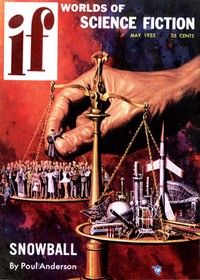
They Were Different — Context and Discussion can be approached with a clearer sense of reading commitment from its source measurements: 9,801 words, 43 min estimated reading time, and 1 detected text section.
The text analysis averages about 18.1 words per sentence, while the detected sections provide another way to judge how the source is divided.
Project Gutenberg metadata also associates the work with “Science fiction,” connecting these edition facts with the source record’s subject description.
Explore this collection
These alternatives are selected using recorded categories and estimated reading time.
About 42 minutes
Social Speculation
9,575 recorded words. 1 minutes difference from this book's estimate.
View Gutenberg source #51687About 44 minutes
Social Speculation
10,050 recorded words. 1 minutes difference from this book's estimate.
View Gutenberg source #58883About 42 minutes
Social Speculation
9,600 recorded words. 1 minutes difference from this book's estimate.
View Gutenberg source #59498Search stored excerpts and compare books → Choose by your preferences →
Choices use stored catalog measurements. Estimates vary with reading speed. A shared category is a catalog label, not a claim that two books have the same argument or literary quality.
Search reads excerpt text stored with this catalog and links to its associated Gutenberg record. The connection is stored in the site database; this tool does not recheck that every excerpt is word-for-word identical to that external record. Excerpt search does not cover every chapter and does not verify historical publication dates.
Catalog snapshot checked: 2026-09-26. Coverage: 96 public books, 96 available source excerpts.
Calculated from edition completeness, EPUB availability, text structure and catalogue metadata. Not a user rating.
Total of 100 points, scaled to a 2.5-5.0 range. Editions with an empty description or a missing EPUB file are not scored.
Public-domain source text
The source text is kept in the dedicated reader, separate from this catalogue record and its commentary.
The story unfolds through a secretary's claim to have transcribed telepathic transmissions from three siblings with psychic abilities. The narrative is deliberately disjointed, presented as raw notes with the admission that nothing has been added in translation. This framing device immediately establishes a tension between the chaotic, lived experience of the protagonists and the orderly record the secretary attempts to create.
The opening pages move abruptly from a news-clip summary of the siblings' history—their strange birth, education, and gifts—to a first-person transmission that begins mid-scene: "Well, Kitten, it seems impossible that three grand, successful years of work could end so suddenly with us lying in a ditch." The reader is dropped into a moment of crisis without preparation, forced to piece together context from fragments.
The text is built from short, unpolished sections that jump between time frames and speakers. The secretary explains that the notes were taken in a special shorthand and left "as disjointed as they gave it." This structural choice mirrors the telepathic medium: thoughts do not arrive in neat paragraphs. For example, a transmission might begin with a reflection on three successful years, then pivot to a memory of a pupil named Lucille who "turned over the stone that freed our personal gremlin," then shift again to the present danger of bullets from friends. The reader experiences the same disorientation the protagonists feel, with no clear chronology or transition.
The effect is that the story resists linear summary. Events are alluded to before they are explained—the "restraining order," the "bench warrant," the "persecution"—forcing the reader to hold multiple timelines in mind. This technique aligns with the theme of psychic perception, where past, present, and future might be sensed simultaneously.
Throughout the excerpts, the protagonists are repeatedly described in positions of physical vulnerability: lying in a ditch, wallowing in mud, anticipating bullets. These images of being trapped or hunted recur across different settings—from an irrigation ditch to a carnival midway to a train station. The language emphasizes sudden reversals: three successful years end "so suddenly," and a joyful reunion at a carnival tent is interrupted by the unnoticed approach of enemies.
The motif of confinement extends to legal and social pressures. The siblings are pursued by a judge who seems vindictive, a sheriff, and deputies. The phrase "we were in deep trouble again—deeper than any that had gone before" suggests a pattern of escalating persecution. Even the act of teaching becomes clandestine: the narrator advises future pupils to "stay underground" and "use care" to avoid detention. The physical and legal traps mirror each other, creating a sense of inescapable pressure.
The narrative moves through a series of contrasting locations: the university, the carnival, the irrigation ditch, the train station, the tent behind the midway. Each setting carries different connotations of visibility and safety. The university offered protection, but the protagonists chose to go "out on our own," entering the public sphere of the carnival. There, they perform shows while secretly recruiting pupils—a precarious balance between exposure and concealment.
The train station scene crystallizes this tension. A ticket agent notices an unusual number of passengers heading to the same small carnival, triggering suspicion. The protagonists' attempt to reunite with former pupils becomes a trap because they let their guard down: "we were all so excited at seeing each other that their presence went unnoticed." The movement from hidden to public space is consistently dangerous, and the narrative tracks these shifts with a sense of mounting claustrophobia.
The story is filtered through multiple layers: the secretary's transcription, the siblings' transmissions, and the implied editorial hand that assembled the clips. The secretary admits to being the siblings' "first and most advanced pupil" and claims to have added nothing, yet the act of selection and ordering is itself interpretive. The transmissions use direct address—"Well, Kitten," "Princess," "Baby"—suggesting an intimate, urgent conversation among a small group. These nicknames hint at relationships and hierarchies that are never fully explained.
The secretary's framing also introduces a religious note: "Pray. And hope—for mankind." This closing plea colors the entire account as a warning or testament, but the fragmented nature of the transmissions prevents the reader from verifying the secretary's interpretation. The voice remains unstable, caught between the raw emotion of the siblings and the retrospective framing of the secretary, who may be shaping the story for her own purposes.
The story's structure—disjointed, recursive, and framed by a self-identified transcriber—invites the reader to question the reliability of the account. Pay attention to the gaps between transmissions and the shifts in address. The narrative does not resolve the tension between the siblings' desire to teach and the forces that oppose them; instead, it leaves the reader with the same uncertainty the characters face. The fragmented form is not a flaw but a deliberate reflection of the telepathic experience the story attempts to convey.
Reading about the siblings' fragmented transmissions, I remembered the summers my brother and I invented our own silent language, a code the adults never cracked. That feeling of being uniquely understood, yet perilously isolated, lingered. Another book once stirred this same ache—the quiet tragedy of minds too intertwined for the world’s comfort—and I recalled it while turning these pages: What Shall It Profit? — Inside the Classic. Some stories just echo that old knowing.
Use these questions to collect your thoughts before moving on.