About 59 minutes
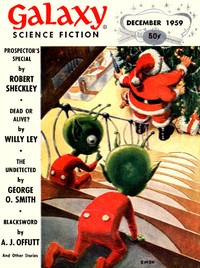
The Undetected — Inside the Classic
Space Future
13,541 recorded words. 3 minutes difference from this book's estimate.
View Gutenberg source #51810

This digital edition of The Gun Runners — Themes and Context is described by source-level measurements including 14,119 words, 1 hr 2 min estimated reading time, and 2 detected text sections.
The text analysis averages about 13.0 words per sentence, while the detected sections provide another way to judge how the source is divided.
Project Gutenberg metadata also associates the work with “Science fiction,” connecting these edition facts with the source record’s subject description.
Explore this collection
These alternatives are selected using recorded categories and estimated reading time.
About 59 minutes
Space Future
13,541 recorded words. 3 minutes difference from this book's estimate.
View Gutenberg source #51810About 59 minutes
Space Future
13,543 recorded words. 3 minutes difference from this book's estimate.
View Gutenberg source #53059About 55 minutes
Space Future
12,550 recorded words. 7 minutes difference from this book's estimate.
View Gutenberg source #59174Search stored excerpts and compare books → Choose by your preferences →
Choices use stored catalog measurements. Estimates vary with reading speed. A shared category is a catalog label, not a claim that two books have the same argument or literary quality.
Search reads excerpt text stored with this catalog and links to its associated Gutenberg record. The connection is stored in the site database; this tool does not recheck that every excerpt is word-for-word identical to that external record. Excerpt search does not cover every chapter and does not verify historical publication dates.
Catalog snapshot checked: 2026-09-26. Coverage: 96 public books, 96 available source excerpts.
Calculated from edition completeness, EPUB availability, text structure and catalogue metadata. Not a user rating.
Total of 100 points, scaled to a 2.5-5.0 range. Editions with an empty description or a missing EPUB file are not scored.
Public-domain source text
The source text is kept in the dedicated reader, separate from this catalogue record and its commentary.
The novella opens with a precise logistical problem: the gun runners, professionals from a future where all nature has been subordinated to human needs, choose the mid-20th century for its combination of reliable weapons and lax social controls. Their operation is nearly flawless—except for a single oversight. The insulation on their time machine, a synthetic protein, proves an ideal culture medium for twentieth-century bacteria, causing small flashes of fire and smoke when they attempt to return. This mechanical failure strands them, setting the stage for a story that intertwines technological breakdown with emotional entanglement.
The future society depicted is an "old ingrowing world" that never reached the stars, where every blade of grass and micro-organism exists solely to serve humans. Hereditary traits that once helped people survive with tigers and streptococci have atrophied, making the 20th century more dangerous for these time travelers than the Eocene would have been for Homo sapiens. The gun runners must undergo painful inoculations, conditioning, and plastic surgery to endure the past. This contrast between a sterile, controlled future and a vibrant, chaotic past is a recurring structural element, emphasizing how the environment shapes human capability.
Moirta, the female gun runner, explains to Dolan that in her time, people understand each other too well to be fooled. Emotion is her trade, as electronics is his. She describes knowing what choice to expect from a man under the influence of certain emotional fields, just as he predicts electron behavior. This analogy frames human feeling as a deterministic system, yet her own tears and vulnerability complicate the claim. The dialogue reveals a society where science studies people instead of physical things, and where every action is assumed to serve a purpose—even the characters' private worries.
Despite their advanced understanding of human behavior, the future people cannot read minds. Moirta admits they know only in general what Dolan and she discuss, not in detail. Dolan's grim response—"as long as they aren't actually mind-readers, they can guess all they want to"—highlights a tension between determinism and privacy. The story repeatedly tests whether knowing someone's likely reaction diminishes the reality of their choice. Moirta's question, "Because we can predict a reaction, does that make it less real?" remains unresolved, inviting readers to consider the nature of free will in a world of psychological certainty.
The narrative shifts between the 20th-century setting and glimpses of the future's sterile environment. The gun runners' time machine is described as basically electronic, with power leads encased in synthetic protein—a detail that becomes crucial when bacteria attack it. This movement is not just temporal but ecological: the future lacks microorganisms, so the travelers are unprepared for biological decay. The story uses these transitions to highlight how each era's physical and social conditions create unique vulnerabilities, from the gun runners' allergic reactions to their inability to predict emotional fallout.
Readers should attend to how Williams uses the time machine's failure as both plot device and metaphor: the very technology that enables the journey is undone by the vitality of the past. The novella's structure—alternating between action and introspective dialogue—mirrors Dolan's struggle to reconcile his technical expertise with Moirta's emotional logic. The ending, though not fully excerpted, is hinted at by the opening line: "a victory that lies at the other end of a bridge 10,000 years long."
Rain fell against the window that afternoon, and I kept thinking about how George Dolan’s world of predicted emotions felt oddly comforting. It wasn’t until the rain softened that I found myself reaching for something lighter, something about ambition’s strange byways. The Spicy Sound of Success — Key Ideas to Explore rests nearby, half-underlined, a quiet counterpoint to all that sterile certainty.
Capture what you thought, learned, and would like to remember.