About 30 minutes
The Bridge — Context and Discussion
Other Worlds
6,898 recorded words. 3 minutes difference from this book's estimate.
View Gutenberg source #60303
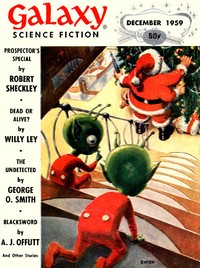
For Sales talk — Inside the Classic, the stored edition analysis reports 7,524 words, 33 min estimated reading time, and 1 detected text section.
The text analysis averages about 19.2 words per sentence, while the detected sections provide another way to judge how the source is divided.
Project Gutenberg metadata also associates the work with “Science fiction,” connecting these edition facts with the source record’s subject description.
Explore this collection
These alternatives are selected using recorded categories and estimated reading time.
About 30 minutes
Other Worlds
6,898 recorded words. 3 minutes difference from this book's estimate.
View Gutenberg source #60303About 28 minutes
Other Worlds
6,292 recorded words. 5 minutes difference from this book's estimate.
View Gutenberg source #58721About 28 minutes
Other Worlds
6,269 recorded words. 5 minutes difference from this book's estimate.
View Gutenberg source #59149Search stored excerpts and compare books → Choose by your preferences →
Choices use stored catalog measurements. Estimates vary with reading speed. A shared category is a catalog label, not a claim that two books have the same argument or literary quality.
Search reads excerpt text stored with this catalog and links to its associated Gutenberg record. The connection is stored in the site database; this tool does not recheck that every excerpt is word-for-word identical to that external record. Excerpt search does not cover every chapter and does not verify historical publication dates.
Catalog snapshot checked: 2026-09-26. Coverage: 96 public books, 96 available source excerpts.
Calculated from edition completeness, EPUB availability, text structure and catalogue metadata. Not a user rating.
Total of 100 points, scaled to a 2.5-5.0 range. Editions with an empty description or a missing EPUB file are not scored.
Public-domain source text
The source text is kept in the dedicated reader, separate from this catalogue record and its commentary.
The story opens with the narrator watching two men cross a courtyard toward his building: one carries a flat briefcase, the other a large square box containing 'the Sim.' The buzzer sounds, and he admits them with 'mixed feelings.' The men are Jake Long and Arnie Blik, Electro Medical Consultants—door-to-door salesmen for a service called Electronic Living (EL). Their polished patter, identical handshakes, and instinctive choice of the narrator's favorite chair establish a tone of practiced manipulation. The narrator, Gaines, is initially a passive observer, but the sales pitch quickly becomes a psychological duel.
The salesmen's technique is a study in calculated confidence. Long opens with a 'sincerely boyish' grin and a handshake that is 'warm, dry, just right.' They maintain the fiction that Gaines is a busy man, though he admits he has 'so little to do' that he welcomes them for entertainment. The pitch is not just about selling a product; it is about controlling the narrative. Long and Blik anticipate objections, mirror each other's gestures, and pivot when challenged. The narrator notes their 'slick, well-trained' demeanor, and the tension escalates when Gaines begins to argue against EL, only to realize Blik has subtly switched him to arguing against himself. The salesmen's confidence is 'like a physical force in the room,' and the scene becomes a battle of wits where the product itself is almost secondary.
Midway through, the story undercuts its own premise. After Gaines triumphantly rejects EL, the wall swings open and a man named Rommy enters, congratulating him on a 'perfect' performance. The narrator feels along the base of his skull for a transmitter 'encased in Natur-flesh.' Long and Blik, it emerges, are also actors; Rommy praises them as 'real actors' who 'felt it.' The sales pitch was a scripted scene, and Gaines's resistance was part of the act. This revelation reframes the entire encounter: the reader, like the narrator, has been watching a performance within a performance. The story's structure mirrors its subject—virtual reality—by blurring the line between authentic experience and staged simulation.
The catalog subjects list 'Virtual reality -- Fiction' and 'Science fiction,' but the excerpts focus less on technology than on the economics of desire. Gaines's earlier argument that 'definitive consumership is the most vital thing' anticipates a world where experience itself is a product. EL subscribers, we learn, are 'down deep opposed to EL'—a paradox that suggests the service feeds on ambivalence. The story's title, 'Sales Talk,' points to the language of persuasion, but the excerpts show that language is also a commodity: the salesmen's scripted banter, the narrator's rehearsed defiance, and the director's satisfaction with a 'good job' all reduce human interaction to exchange value. The final twist—that the entire scene is a tape for EL subscribers—implies that even resistance can be packaged and sold.
Blomberg's story, published in 1959, anticipates later concerns about immersive media and the blurring of reality and performance. Readers should attend to the layered structure: the sales pitch, the meta-theatrical reveal, and the unresolved question of what EL actually does with its tapes. The excerpts do not disclose the full scope of the technology or its societal impact, but the story's strength lies in its tight focus on a single, tense encounter that keeps doubling back on itself.
That rainy afternoon, I kept thinking about the salesmen’s hollow performance long after closing the book. Their polished words lingered, oddly weightless. Later, while drying dishes, I stumbled onto A Toothache on Zenob — Reading Notes and found the same quiet unease about how we perform our own comforts. One story simply handed me to the other, like rooms sharing a wall.
A brief reflection can help important ideas stay with you longer.