About 72 minutes
Big Baby — Key Ideas to Explore
Other Worlds
16,550 recorded words. 0 minutes difference from this book's estimate.
View Gutenberg source #51735
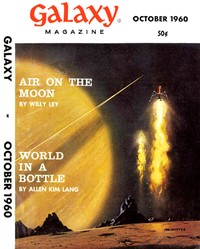
World in a Bottle — Reading Companion can be approached with a clearer sense of reading commitment from its source measurements: 16,410 words, 1 hr 12 min estimated reading time, and 2 detected text sections.
The text analysis averages about 14.8 words per sentence, while the detected sections provide another way to judge how the source is divided.
Project Gutenberg metadata also associates the work with “Science fiction,” connecting these edition facts with the source record’s subject description.
Explore this collection
These alternatives are selected using recorded categories and estimated reading time.
About 72 minutes
Other Worlds
16,550 recorded words. 0 minutes difference from this book's estimate.
View Gutenberg source #51735About 75 minutes
Other Worlds
17,108 recorded words. 3 minutes difference from this book's estimate.
View Gutenberg source #51408About 63 minutes
Other Worlds
14,322 recorded words. 9 minutes difference from this book's estimate.
View Gutenberg source #51273Search stored excerpts and compare books → Choose by your preferences →
Choices use stored catalog measurements. Estimates vary with reading speed. A shared category is a catalog label, not a claim that two books have the same argument or literary quality.
Search reads excerpt text stored with this catalog and links to its associated Gutenberg record. The connection is stored in the site database; this tool does not recheck that every excerpt is word-for-word identical to that external record. Excerpt search does not cover every chapter and does not verify historical publication dates.
Catalog snapshot checked: 2026-09-26. Coverage: 96 public books, 96 available source excerpts.
Calculated from edition completeness, EPUB availability, text structure and catalogue metadata. Not a user rating.
Total of 100 points, scaled to a 2.5-5.0 range. Editions with an empty description or a missing EPUB file are not scored.
Public-domain source text
The source text is kept in the dedicated reader, separate from this catalogue record and its commentary.
The narrator, John, introduces himself as a “Lapin”—one of the gnotobiotic humans raised in a germ-free environment at Central University. The story opens with a tense encounter: John, wearing a sealed plastic suit and helmet, is pulled over for speeding by an Indiana state trooper. The officer mistakes him for a space-opera fugitive, but John explains his sterility suit is a medical necessity, not a costume. This collision of mundane traffic law with extraordinary biology sets the tone for a narrative that constantly juxtaposes the ordinary and the alien.
The excerpts reveal that John’s sterility is both a scientific achievement and a life sentence. He describes his suit as a “chastity-suit” and his helmet as a “fishbowl,” emphasizing the isolation and vulnerability of his condition. When the trooper jokes about adopting a child, John corrects him: “Sterile like germ-free.” The term “gnotobiotic” is used, anchoring the story in real biological research. John’s frustration is palpable when he tells his friend Dorsey, “We’re life prisoners and we’ve committed no crime.” The catalog subject “Experiments” is thus not abstract; it is embodied in John’s daily existence, a controlled experiment that he cannot escape.
John’s longing for space travel is a central tension. He confesses he would trade his medical degree for an “Ordinary Spaceman’s ticket.” The discovery of the Immermann skull—a human skull found on Mars with “acarious teeth”—becomes a focal point. Dorsey, a radio astronomer, notes the skull’s lack of cavities, linking it to John’s germ-free state. The skull suggests an ancient, possibly extraterrestrial, human presence. Dorsey speculates about “extra-solar man” and a lost expedition. The catalog subject “Science fiction” is evident, but the excerpts ground it in specific scientific puzzles: dental evidence, radio signals, and the mystery of why no other artifacts have been found.
The narrative is delivered in a colloquial, first-person voice that blends technical jargon with dry humor. John describes his reserve-air tank as “cunningly curved and cushioned against my spine so that I can lean back without courting lordosis.” The dialogue with the trooper is sharp and natural, revealing character through banter. The story’s structure alternates between action (the traffic stop) and exposition (the conversation with Dorsey about the skull and radio signals). This pattern suggests a mystery unfolding through recollection and discussion, rather than linear plot. The excerpts do not reveal the content of the Adelaide thread-recording, leaving the central enigma unresolved.
The catalog lists “Man-woman relationships” as a subject, but the excerpts contain only a single reference to “Anne,” John’s desired companion. No interaction with Anne appears in the provided text, and the relationship is not developed. Similarly, “Experiments” is accurate but narrow: the experiment is John’s entire life, not a discrete lab procedure. The strongest subject is “Science fiction,” which the excerpts support through space travel, alien artifacts, and speculative biology. However, the catalog omits the story’s central theme of confinement and freedom, which is more prominent in the excerpts than any romantic plot. Readers should note that the romance may be a minor element, not the core of the work.
The excerpts from World in a Bottle present a protagonist caught between two kinds of isolation: the literal sterility of his tank and the vast emptiness of space. The story’s power lies in its concrete details—the hiss of the air valve, the feel of a plastic suit, the ache of a dream deferred. As you read, pay attention to how Lang uses scientific specificity to make the fantastic feel immediate. The unresolved thread-recording and the skull’s implications suggest a mystery that may be more about origins than destinations.
Some stories cling to you like dust in a sunbeam. The gnotobiotic man in World in a Bottle aches for vastness while confined to his sterile sphere, and I often think of him when I revisit The Last Victory — Themes and Context, where another soul learns that endurance is its own quiet frontier. They whisper to each other across my shelves.
Your answers remain private and are stored only in this browser.