About 38 minutes
Hunt the Hunter — Edition Insights
Machines Invention
8,624 recorded words. 0 minutes difference from this book's estimate.
View Gutenberg source #51433
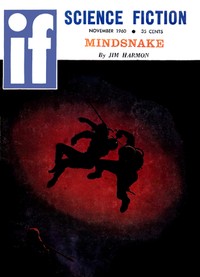
The catalog record for Mindsnake — Themes and Context provides practical reading context through 8,584 words, 38 min estimated reading time, and 1 detected text section.
The text analysis averages about 12.5 words per sentence, while the detected sections provide another way to judge how the source is divided.
Project Gutenberg metadata also associates the work with “Science fiction,” connecting these edition facts with the source record’s subject description.
Explore this collection
These alternatives are selected using recorded categories and estimated reading time.
About 38 minutes
Machines Invention
8,624 recorded words. 0 minutes difference from this book's estimate.
View Gutenberg source #51433About 37 minutes
Machines Invention
8,486 recorded words. 1 minutes difference from this book's estimate.
View Gutenberg source #51380About 39 minutes
Machines Invention
8,827 recorded words. 1 minutes difference from this book's estimate.
View Gutenberg source #51699Search stored excerpts and compare books → Choose by your preferences →
Choices use stored catalog measurements. Estimates vary with reading speed. A shared category is a catalog label, not a claim that two books have the same argument or literary quality.
Search reads excerpt text stored with this catalog and links to its associated Gutenberg record. The connection is stored in the site database; this tool does not recheck that every excerpt is word-for-word identical to that external record. Excerpt search does not cover every chapter and does not verify historical publication dates.
Catalog snapshot checked: 2026-09-26. Coverage: 96 public books, 96 available source excerpts.
Calculated from edition completeness, EPUB availability, text structure and catalogue metadata. Not a user rating.
Total of 100 points, scaled to a 2.5-5.0 range. Editions with an empty description or a missing EPUB file are not scored.
Public-domain source text
The source text is kept in the dedicated reader, separate from this catalogue record and its commentary.
The story opens with Hammen, a self-proclaimed Witch, walking a crowded ramp on a strange planet, his dog Lad at his heels. The crowd's cry of "Witch!" is met with indifference; Hammen wears the label "like a badge of honor." This immediate tension between social stigma and personal identity sets the tone. Hammen's preference for walking "under his own power" even to the stars signals a core independence that will be tested against the psychic dangers of the Mindsnake and the manipulations of fellow telepaths.
Hammen's relationship with his dog Lad is presented as a running joke—Lad "often asked Hammen how anyone could possibly hate Hammen"—but it also establishes a key dynamic. Hammen dismisses Lad's questions with "shut up; he couldn't understand—he was only a dog." Yet later, in the transmission space, Hammen lies to Gordus about Lad's presence, claiming Witches don't need Familiars. This contradiction suggests that Lad may be more than a pet, perhaps a psychic anchor or a cover for Hammen's true abilities. The text hints that the Familiar is both a deception and a necessity, leaving the reader to weigh Hammen's words against his actions.
The Mindsnake is described as a "black thought slithering" entity that feeds on psychic energy. Hammen reflects that Gordus, an older Companion, is "not qualified to be a Companion after the generations of growth of the Mindsnake." This implies the threat is escalating over time, making even experienced telepaths obsolete. Hammen's internal question—"How long before the Snake gets so big I will not be qualified?"—underscores a personal stake. The Mindsnake is not just a monster but a measure of psychic evolution, and the story's tension hinges on whether Hammen can outwit both the creature and his human rivals.
In the transmission space, Gordus forces Hammen to help him extract information from the mind of Isodel Van Der Lies, a "first authentic female genius" whose theory could destroy the Mindsnake. Gordus succeeds in taking the theory while keeping it hidden from Hammen. The conflict is not about saving the world but about credit and control: Gordus wants to "take the theory from her," not necessarily to use it. Hammen's motivation is more immediate—survival. This scene highlights a pattern of selfishness among the psychics, suggesting that the Mindsnake may be a symptom of a deeper moral decay.
Readers should pay close attention to Hammen's shifting alliances and his use of deception. The story's brevity (under 9,000 words) means every detail—from Lad's pointed ears to the "brightly polished faces" of Hale and Lora—carries weight. The excerpts leave unresolved whether Hammen is a hero, a rogue, or something in between, and whether the Mindsnake is a literal entity or a metaphor for psychic entropy. The ending is not provided, so the reader must piece together the clues from the fragmented transmission.
Create a short personal record of your experience with this book.