About 42 minutes
Willie's Planet — Reading Notes
Space Future
9,656 recorded words. 1 minutes difference from this book's estimate.
View Gutenberg source #59172
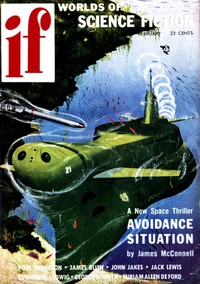
The catalog record for Jekyll-Hyde Planet — Background and Themes provides practical reading context through 9,336 words, 41 min estimated reading time, and 1 detected text section.
The text analysis averages about 12.2 words per sentence, while the detected sections provide another way to judge how the source is divided.
Project Gutenberg metadata also associates the work with “Science fiction,” connecting these edition facts with the source record’s subject description.
Explore this collection
These alternatives are selected using recorded categories and estimated reading time.
About 42 minutes
Space Future
9,656 recorded words. 1 minutes difference from this book's estimate.
View Gutenberg source #59172About 40 minutes
Space Future
9,006 recorded words. 1 minutes difference from this book's estimate.
View Gutenberg source #59842About 43 minutes
Space Future
9,687 recorded words. 2 minutes difference from this book's estimate.
View Gutenberg source #51337Search stored excerpts and compare books → Choose by your preferences →
Choices use stored catalog measurements. Estimates vary with reading speed. A shared category is a catalog label, not a claim that two books have the same argument or literary quality.
Search reads excerpt text stored with this catalog and links to its associated Gutenberg record. The connection is stored in the site database; this tool does not recheck that every excerpt is word-for-word identical to that external record. Excerpt search does not cover every chapter and does not verify historical publication dates.
Catalog snapshot checked: 2026-09-26. Coverage: 96 public books, 96 available source excerpts.
Calculated from edition completeness, EPUB availability, text structure and catalogue metadata. Not a user rating.
Total of 100 points, scaled to a 2.5-5.0 range. Editions with an empty description or a missing EPUB file are not scored.
Public-domain source text
The source text is kept in the dedicated reader, separate from this catalogue record and its commentary.
Jack Lewis's Jekyll-Hyde Planet opens with a shipboard squawk box announcing transfer points to Orion, Antares, Cygni, and Polaris—destinations that, as Claude Marshall explains to his son Billy, are not yet reachable. The joke underscores a central tension: the colony on Centauri IV is both a fresh start and a dead end. The story's structure moves from the cramped ship lounge to the settlement office, then to the disputed land, each space narrowing the characters' options. Recurring images of confinement—the boy gripping his father's arm, the wife sitting with folded hands, the director's office as a stage for a forced offer—build a sense of pressure that belies the planet's advertised paradise.
Leon Stubbs, the director, is described with a voice that has "an all-too-familiar ring"—a hint that he is about to make an offer. The excerpts do not reveal what that offer is, but the pattern is set: the paradise is administered by a bureaucracy that replicates Earth's delays and manipulations. The nine-year round trip for a message to Washington makes the colony a place where decisions are effectively final, and where the director holds arbitrary power. The story's structure thus mirrors the colonists' situation: a long journey to a dead end, then a standoff in a small office.
This movement is mirrored in the dialogue. Claude's long explanation to Billy about Earth's problems is a monologue delivered in the ship, a contained space that forces the family into intimacy. Later, in the office, the conversation becomes a tense negotiation, with Stubbs "shuffling through papers" and lighting a cigar before speaking. The excerpts do not show the land itself—only the anticipation of it. The planet remains a picture, a memory of "every tree, every square inch" that Claude has studied for seven years. The story's structure thus keeps the paradise offstage, making it a symbol rather than a setting.
Voices are also emphasized: the squawk box's mechanical voice, the boy's repeated questions, Claude's careful explanations, Stubbs's measured tone. The director's voice has "an all-too-familiar ring"—a phrase that implies Claude has heard such offers before. The story's dialogue carries the weight of the time-lag: every statement is a delayed response, every decision a long wait. The excerpts do not resolve the claim dispute, but they establish that the real conflict is not about land but about the power to make someone wait.
The Whitings, the other claimants, are mentioned but not seen in the excerpts; they exist as a rival claim and a potential conflict. Claude's wife suggests talking to them, but Claude has already "felt him out" and found him unwilling to compromise. The story thus sets up a zero-sum game where the paradise is reduced to a hundred acres. The excerpts end before any resolution, leaving the reader with the same uncertainty the characters face: the land is there, but the path to it is blocked by procedure and personality.
Readers approaching Jekyll-Hyde Planet should attend to the spaces between the dialogue—the pauses, the gestures, the descriptions of rooms and seats. The story's tension comes not from action but from the weight of waiting and the slow revelation of a system that turns a dream into a dispute. The excerpts suggest that the planet's true nature is not a split between good and evil, but between the promise of room and the reality of a closed door.
I keep thinking about that colony world, how the waiting itself became the cage. It reminded me of The Man Outside, where a similar silence settles over people who’ve lost track of what they’re waiting for. Both feel less like adventure and more like a held breath—the promise of open spaces slowly turning into walls. I suppose some stories just share that quiet ache. The Man Outside — Inside the Classic sits with me the same way now.
Capture what you thought, learned, and would like to remember.