About 36 minutes
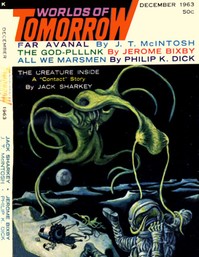
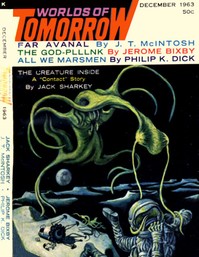
The Creature Inside — Context and Discussion
Social Speculation
8,106 recorded words. 0 minutes difference from this book's estimate.
View Gutenberg source #53089

The catalog record for Bramble Bush — Reading Notes provides practical reading context through 8,071 words, 36 min estimated reading time, and 1 detected text section.
The text analysis averages about 13.8 words per sentence, while the detected sections provide another way to judge how the source is divided.
Project Gutenberg metadata also associates the work with “Science fiction,” connecting these edition facts with the source record’s subject description.
Explore this collection
These alternatives are selected using recorded categories and estimated reading time.
About 36 minutes
Social Speculation
8,106 recorded words. 0 minutes difference from this book's estimate.
View Gutenberg source #53089About 35 minutes
Social Speculation
7,880 recorded words. 1 minutes difference from this book's estimate.
View Gutenberg source #51713About 34 minutes
Social Speculation
7,689 recorded words. 2 minutes difference from this book's estimate.
View Gutenberg source #51335Search stored excerpts and compare books → Choose by your preferences →
Choices use stored catalog measurements. Estimates vary with reading speed. A shared category is a catalog label, not a claim that two books have the same argument or literary quality.
Search reads excerpt text stored with this catalog and links to its associated Gutenberg record. The connection is stored in the site database; this tool does not recheck that every excerpt is word-for-word identical to that external record. Excerpt search does not cover every chapter and does not verify historical publication dates.
Catalog snapshot checked: 2026-09-26. Coverage: 96 public books, 96 available source excerpts.
Calculated from edition completeness, EPUB availability, text structure and catalogue metadata. Not a user rating.
Total of 100 points, scaled to a 2.5-5.0 range. Editions with an empty description or a missing EPUB file are not scored.
Public-domain source text
The source text is kept in the dedicated reader, separate from this catalogue record and its commentary.
Dr. David Lessing, director of the Hoffman Center, is confronted by a terrified eight-year-old boy named Tommy Gilman, who wears a grey monitor-helmet to block psychic signals. The boy's fear registers as a 'wildly thrashing pattern' on the tape, and he begs to remove the helmet, though Lessing insists it is necessary. The story opens with a Mother Goose epigraph about a man who jumps into a bramble bush, foreshadowing a theme of self-inflicted harm and paradoxical healing.
The narrative quickly establishes a tension between the controlled environment of the 'Farm'—where psi-talented children are monitored—and the boy's desperate desire to escape. Lessing's field director, Jack Dorffman, is exasperated, while Lessing himself seems uneasy, sensing that something has gone 'horribly wrong.'
The grey monitor-helmet is a central object, described as an 'insulator' that 'stops things from going out' and 'stops things from going in.' For Tommy, it is both protection and prison. He pleads, 'If I could only take this off,' and later, when his condition worsens, he says, 'I can't get it off.' The helmet's dual role—safeguarding the boy from psychic overload while isolating him—mirrors the story's broader conflict between safety and freedom.
Lessing's own history with psi-contact is hinted at: he has 'felt it in his own mind' before. The helmet, then, is not just a plot device but a symbol of the uneasy compromise required to manage paranormal abilities. The physical discomfort Tommy experiences—'My head hurts. I hurt all over'—suggests that the barrier itself may be causing harm, raising questions about whether the cure is worse than the condition.
A key exchange occurs when a character named Melrose warns Lessing against publishing his theory, arguing that becoming an 'Authority' would be 'the most devastating thing that could possibly happen.' Lessing elaborates: an Authority's ideas carry undue weight, and the fight to defend one's reputation can destroy objectivity. 'What if he just happens to be wrong?' Lessing asks, pointing out that once a person is an Authority, 'the question of what's right and what's wrong gets lost in the shuffle.'
This meta-scientific critique is unusual for a 1957 science fiction story. It directly challenges the ideal of objective research, suggesting that institutional prestige can corrupt inquiry. Dorffman dismisses Melrose as a 'crackpot,' but Lessing takes the warning seriously, noting that 'this field of work is different from any other.' The tension between advancing knowledge and the social dynamics of science becomes a central concern.
Tommy's fear is not merely emotional but physically measurable: the 'fear-pattern' on the tape is 'alive,' and he is 'literally pulsating with fear.' When Lessing tries to take a toy fire engine, Tommy bites him—a visceral, animal response. The story treats fear as a contagious, almost psychic phenomenon, capable of overwhelming both the boy and those around him.
Lessing's own reaction is telling: he feels 'a cold knot gather in the pit of his stomach.' The narrative implies that psi-talented individuals may broadcast their terror, affecting others involuntarily. This transforms fear from a personal emotion into a public hazard, complicating the ethical landscape of the Hoffman Center's work. The boy's deterioration—from articulate terror to a 'stolid' state where he 'didn't even look at' Lessing—suggests that the very tools meant to help may be exacerbating the problem.
The excerpts leave Tommy's fate unresolved and Lessing's decision about his theory hanging. Readers should attend to how the story balances the scientific and the human: the helmet, the monitor tapes, and the Farm are all technological responses to a deeply personal crisis. The epigraph's 'bramble bush'—a place of pain and paradoxical restoration—may offer a clue to the story's resolution. Pay particular attention to how Nourse uses physical details (the bite, the toy fire engine) to ground speculative elements in concrete, unsettling reality.
There's a moment in Bramble Bush where the scientist realizes his neat theories about telepathy can't contain a child's raw fear, and it reminded me of something quieter in I Am a Nucleus — Reading Notes — how we all orbit around our own unspoken assumptions, thinking we're the hub until someone else's gravity pulls us gently off course. Both left me feeling a little more tender toward my own blind spots.
A brief reflection can help important ideas stay with you longer.