
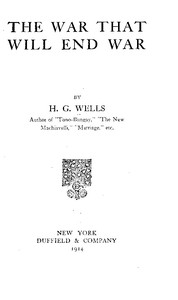
The War That Will End War by H. G. Wells
Forget Martians and time machines for a moment. In 1914, as Europe plunged into the chaos of World War I, H.G. Wells turned from fiction to fierce political argument. The War That Will End War isn't a novel; it's a collection of passionate essays written in the war's first few months. Wells channels his horror at the conflict into a bold, hopeful thesis: this very war, if fought with the right purpose, could be the last one. He envisions the Allied powers not just defeating Germany, but dismantling the old system of rival empires and secret treaties to build a new world order—a kind of league of nations dedicated to peace.
The Story
There's no traditional plot here. Instead, Wells builds a case, piece by piece. He diagnoses the war's causes as nationalism, militarism, and outdated diplomacy. Then, he prescribes the cure: a total Allied victory followed by a radical peace. He argues for disarmament, open diplomacy, and a new international organization to settle disputes. The 'story' is the argument itself—a rapid-fire, urgent attempt to steer the colossal tragedy of the war toward a specific, positive outcome. You're reading a blueprint for the postwar world, drafted while the trenches were still being dug.
Why You Should Read It
This book is a time capsule of a specific kind of hope, one that feels almost alien now. Wells's certainty is staggering. He wasn't naive about the war's brutality, but he was utterly convinced that human reason could emerge victorious. Reading it is emotionally complex. You admire his vision for a peaceful world (many of his ideas prefigure the UN), but you also know the heartbreaking history that followed—the failed League of Nations, the Second World War. That tension makes it incredibly powerful. It's less about whether Wells was 'right' and more about witnessing the moment when such grand, optimistic thinking was still possible.
Final Verdict
This is a must-read for anyone interested in World War I history, political thought, or H.G. Wells himself. It's perfect for history buffs who want to go beyond battle dates and understand the intellectual climate of 1914. It's also great for readers who enjoy primary sources that crackle with immediacy. You won't get a neat narrative, but you'll get a direct, unfiltered dose of one man's attempt to make sense of the senseless and force a happy ending onto a global nightmare. It's a short, provocative, and ultimately poignant book.
This content is free to share and distribute. You do not need permission to reproduce this work.

Logan Lewis
1 year agoEnjoyed every page.