
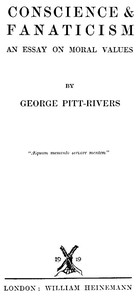
Conscience & Fanaticism: An Essay on Moral Values by Pitt-Rivers
Forget a traditional plot with a beginning, middle, and end. This book is an intellectual journey. George Pitt-Rivers, writing from the turbulent early 20th century, sets out to examine the two powerful forces that drive human action: conscience (our inner moral guide) and fanaticism (an uncompromising, often destructive, attachment to an idea). He doesn't tell a single story, but builds his case by looking at many—from historical events and social movements to the psychology of everyday decisions.
The Story
Think of it less as a story and more as a map of the human moral landscape. Pitt-Rivers starts by defining his terms. He argues that both conscience and fanaticism spring from a deep commitment to a belief. The difference lies in their flexibility and relationship to reality. A conscience can listen, learn, and feel doubt. A fanaticism cannot. The 'plot' is his exploration of this boundary. He shows how noble causes can be hijacked by rigid thinking, and how personal integrity can sometimes look, from the outside, like stubbornness. He moves from big societal examples down to the individual, asking how we can tell which force is really at the wheel in our own lives.
Why You Should Read It
I picked this up expecting a dry, old-fashioned essay. What I found was startlingly current. In our world of heated online debates and polarized politics, Pitt-Rivers's questions hit home. His writing is clear and direct, not stuffy. He helped me put names to feelings I've had: that unease when someone is 'right' but cruel about it, or the internal conflict between sticking to my guns and being open-minded. This book doesn't give easy answers. Instead, it gives you a sharper lens to look at the news, history, and even your own family arguments. It's a quiet book that makes a loud point about the dangers of absolute certainty.
Final Verdict
This is not for someone looking for a relaxing beach read. It's for the curious thinker, the person who enjoys philosophy but finds some texts too dense. It's perfect for book club discussions (guaranteed to spark debate!), history buffs interested in early 20th-century thought, and anyone trying to make sense of the stubborn conflicts in our world today. It's short, so it's not a huge commitment, but the ideas will stick with you long after you finish the last page.
You are viewing a work that belongs to the global public domain. Access is open to everyone around the world.
Sandra Jackson
11 months agoI stumbled upon this title and the author's voice is distinct and makes complex topics easy to digest. I will read more from this author.
Edward Hill
1 year agoJust what I was looking for.



Elijah Gonzalez
6 months agoLoved it.